









Alta Vista (Chalchihuites)
Archeological site
Alta Vista (Chalchihuites)
One of the most important ceremonial centers of northern Mesoamerica. Its orientation allows for the observation of the Sun’s yearly movement and, like Chichen Itza, it attracts visitors at the time of the spring equinox.
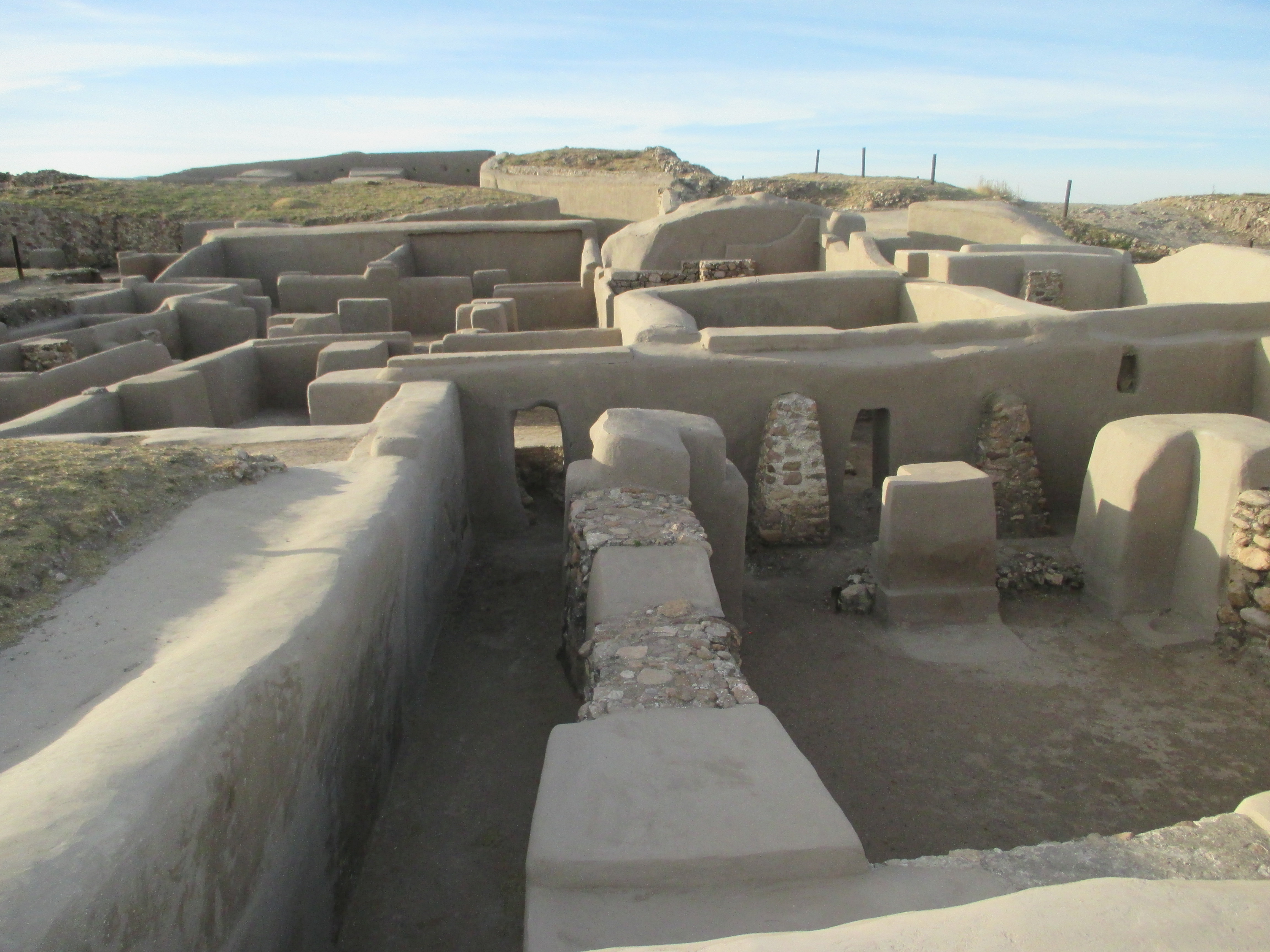
Alta Vista was the most important ceremonial center in the early period of the Chalchihuites culture (200-900/950 AD). It was founded between the years 400 and 450 by priests linked to Teotihuacan, and reached its full splendor in the years 700-750. The research carried out at the site reveals that it was perfectly designed, starting with its proximity to the Tropic of Cancer, which demonstrates its significance and uniqueness.
The ancient settlers of Alta Vista used the Chalchihuites mountain range as a calendar on the eastern horizon, which they used to observe the annual shift of the Sun, allowing them to anticipate seasonal changes which were very important for the farming cycle. The city’s monuments were designed not only to record the sunrise but also the Sun’s movement across the sky and sunsets. The corners of the main plazas and buildings projected outwards, in the direction of the four cardinal points, and their alignment with the Sun and the North Star indicate that Alta Vista was set up as a site of worship dedicated to the Sun and the four directions of the universe.
In addition to the site’s astronomical significance, mining activity was also very important. Approximately 800 pre-Hispanic mines are recorded, used by the Chalchihuites culture over a period of around 600 years.
This ceremonial center was abandoned between the years 850 and 900, following a considerable growth in human sacrifices.
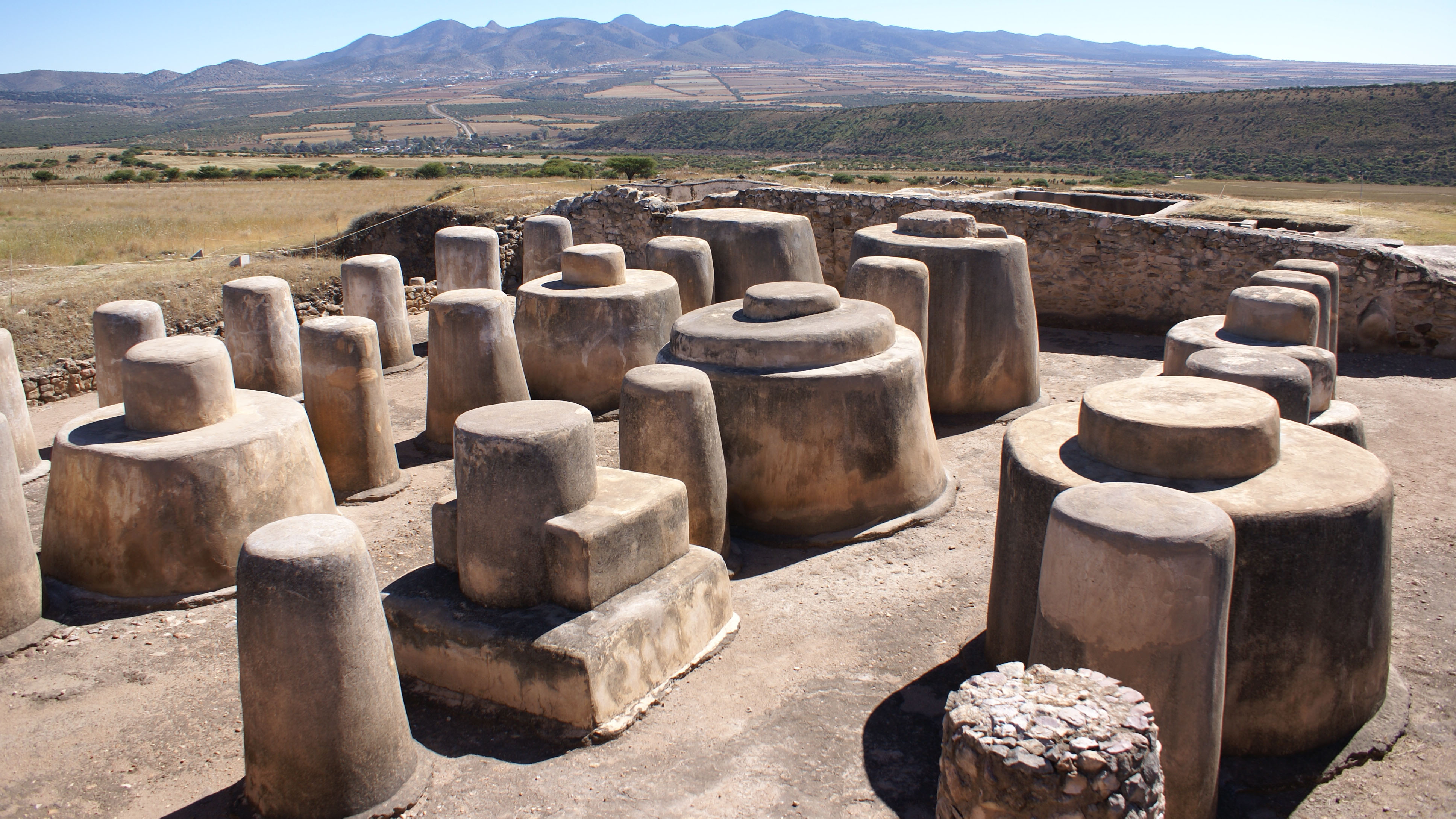
Alta Vista was discovered in 1908 by the then archeology student, Manuel Gamio, who, after registering the site, began excavations there, mainly in what now is called the Salón de las Columnas ("Hall of Columns"). These events were published on October 25, 1908, by the Mexico City newspaper “El Imparcial.” However, due to a lack of excavation permits, the work was suspended and a guard was assigned to look after the site. Despite this, during the years that followed, the remains suffered from extensive damage.
In the 1920s, the archeologist Eduardo Noguera and the head of the Archeology Department of the Ministry for Public Education, José Reygadas Vértiz, carried out a survey of Alta Vista and performed consolidation work on the original stucco of the walls and columns. In 1930, the archeologist Agustín García Vega cleared away the vegetation and designed a roof to protect the Hall of Columns. Several years later the US anthropologist John Alden Mason visited the site as part of a research project, the results of which led to the first definition of the Chalchihuites culture. Román Piña Chan, from the INAH, and John Graham, from the University of Southern Illinois in Carbondale, dug test pits in the site's southwestern plaza in 1958.
After having made various discoveries in the region, J. Charles Kelley and a team of researchers from the University of Southern Illinois began excavations in the site during 1971, and consolidated various spaces. Subsequently, this same team carried out periods of work during 1974, 1975 and 1976. In the following years, their work continued together with archeologists from the INAH Zacatecas Center, resulting in increased research in the site’s interior and repairs to the damaged monuments. Since 1994 and to date, the archeologist Baudelina L. García Uranga, from the INAH Zacatecas Center, has continued the maintenance works at the site.
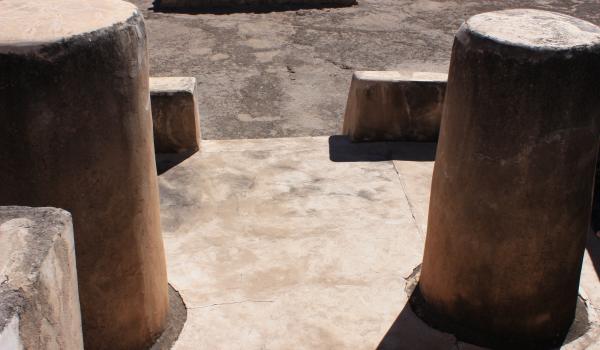
Estructura IV
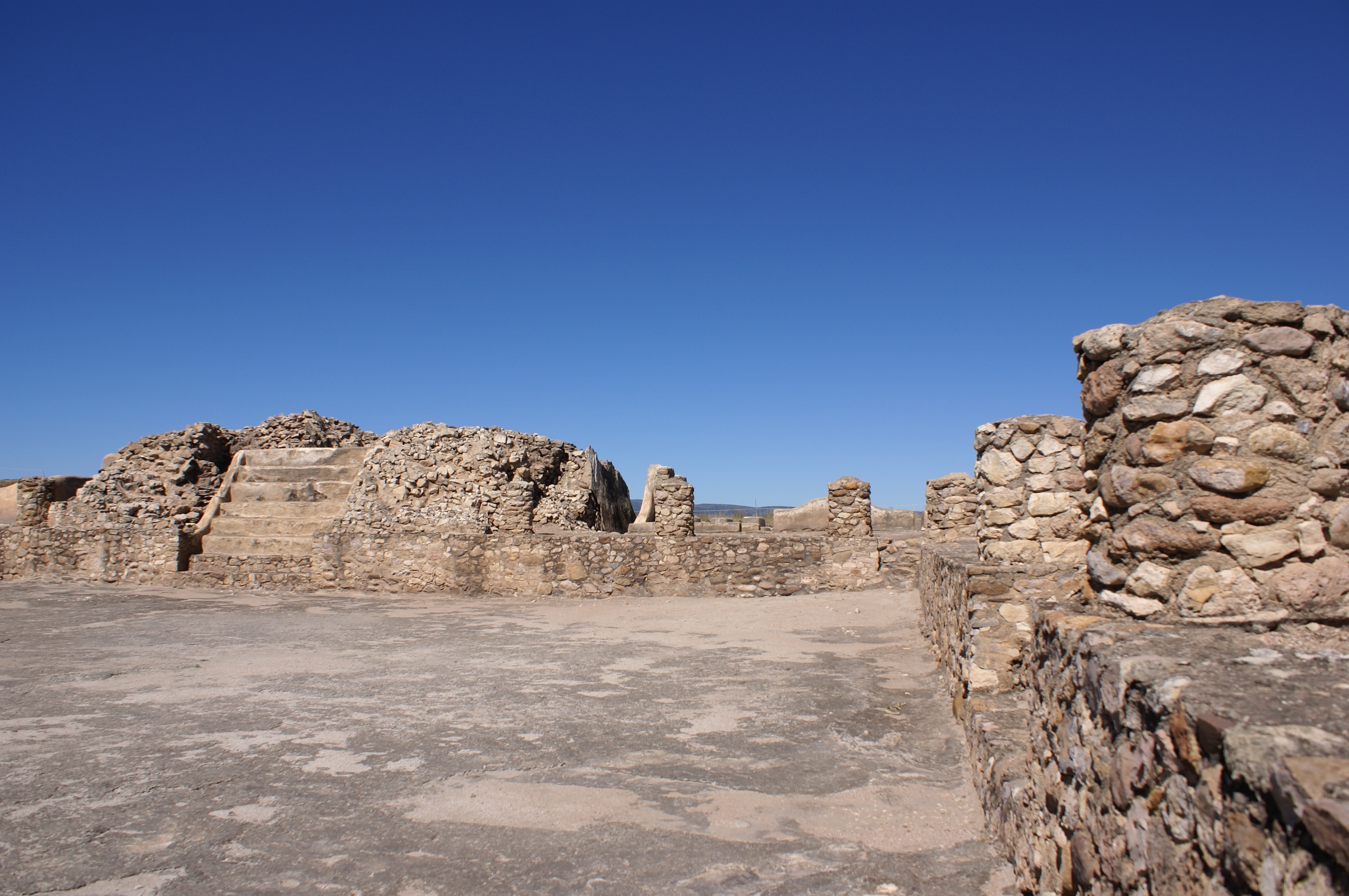
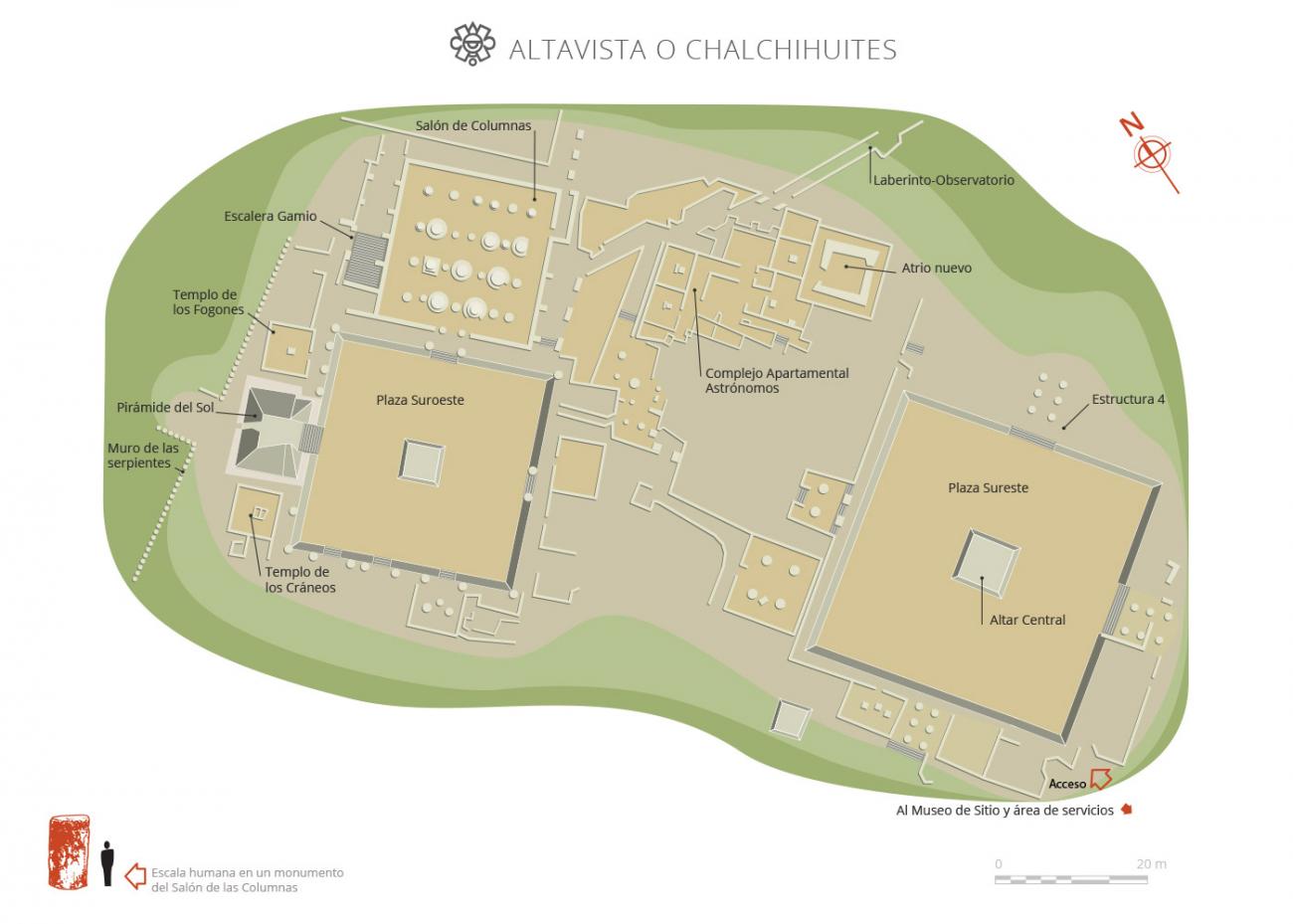
Square rectangular with pyramidal base in the center. It is limited on the sides by elevated walkways with interior and exterior staggered accesses, and in its interior there are columns that must have supported roofs. The corners are oriented towards the cardinal points. Three of the sides have…
Estructura IV
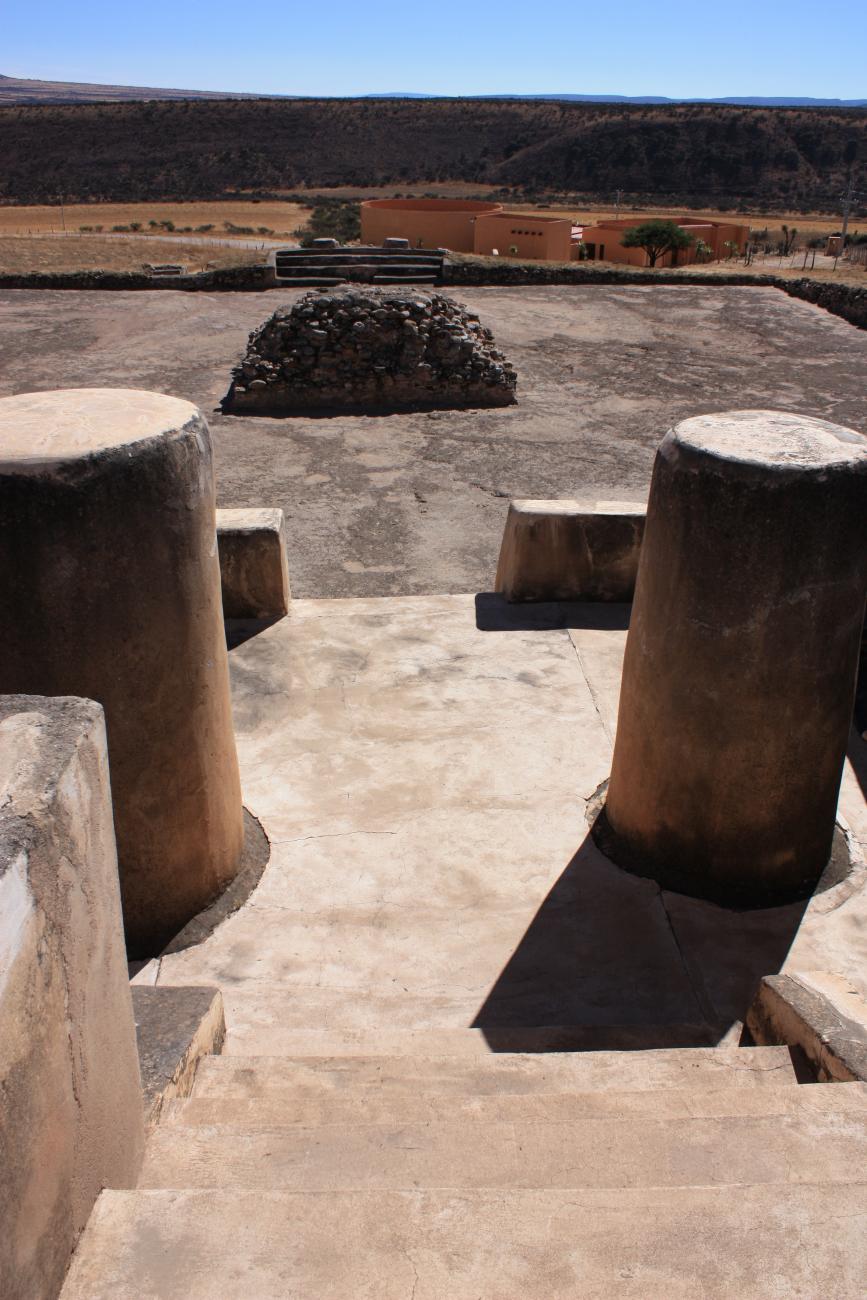
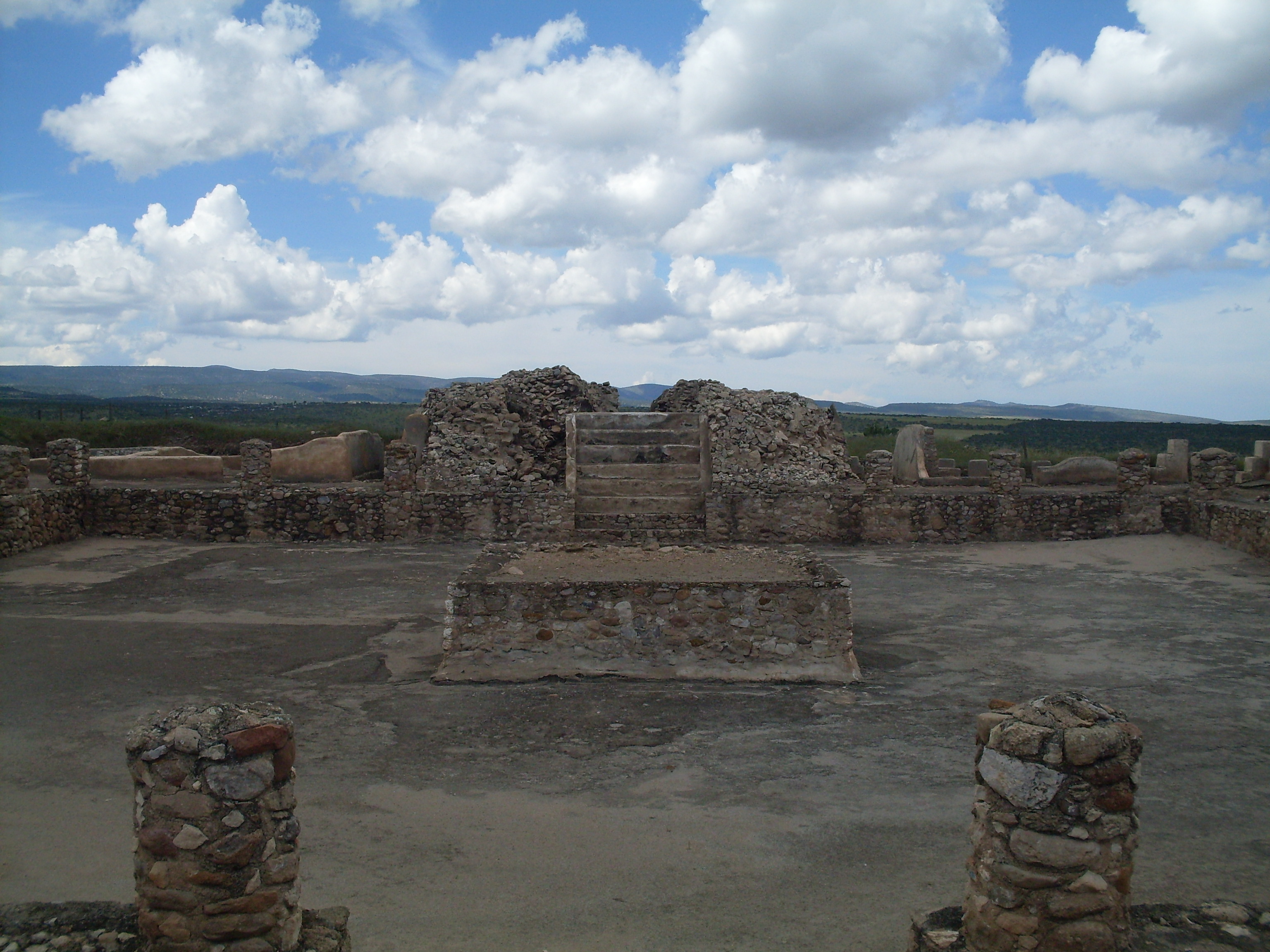
Square rectangular with pyramidal base in the center. It is limited on the sides by elevated walkways with interior and exterior staggered accesses, and in its interior there are columns that must have supported roofs. The corners are oriented towards the cardinal points. Three of the sides have attached platforms on which lateral rooms were built.
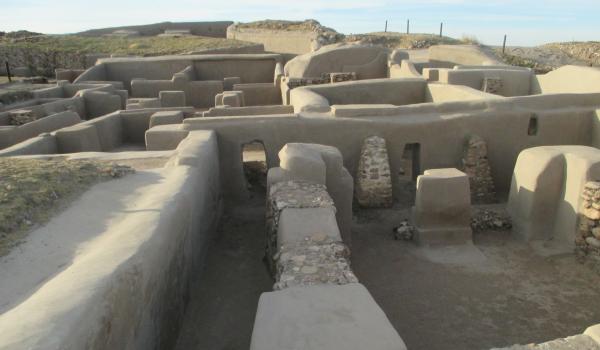
Atrio Nuevo
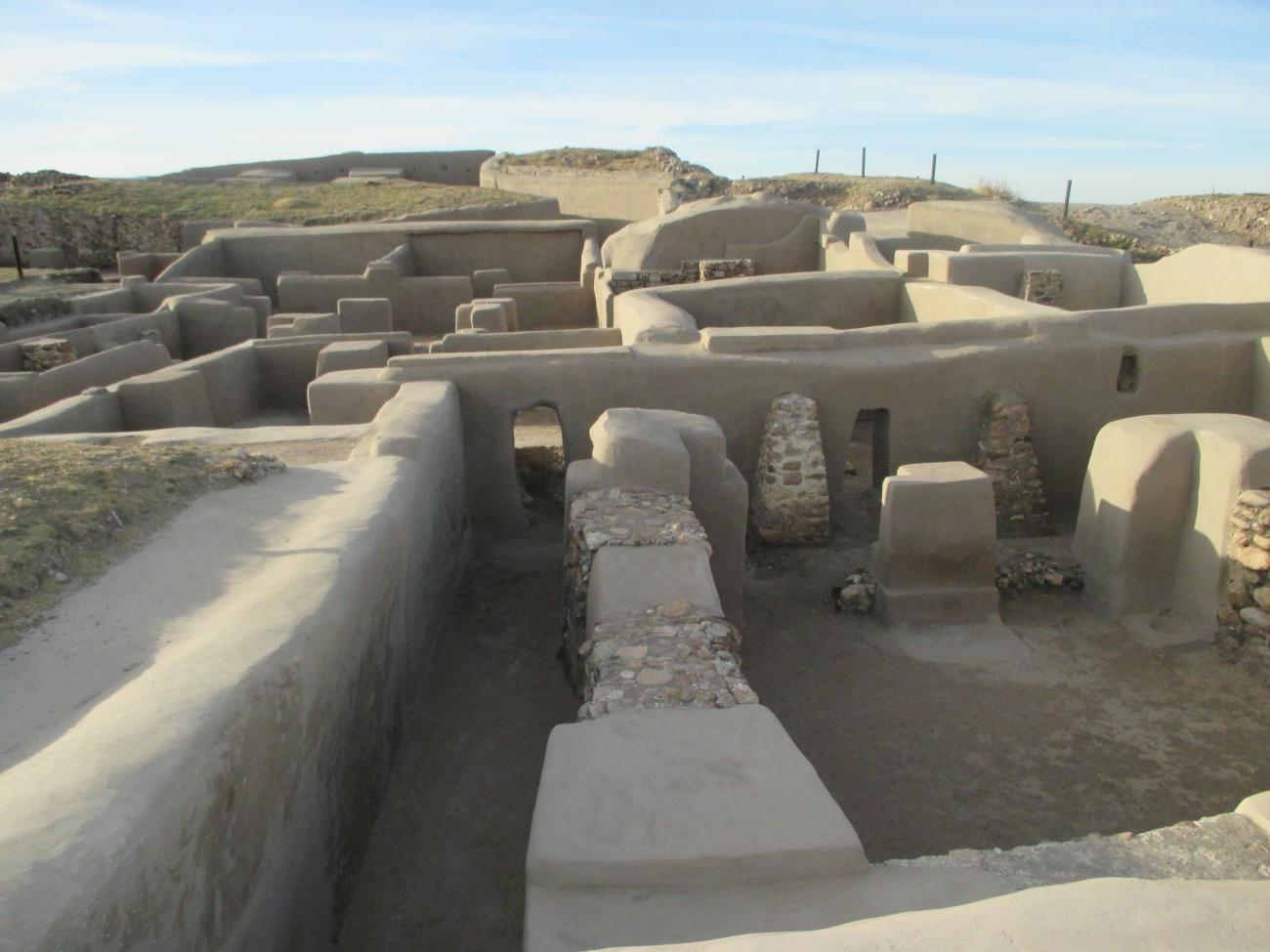
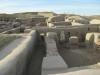
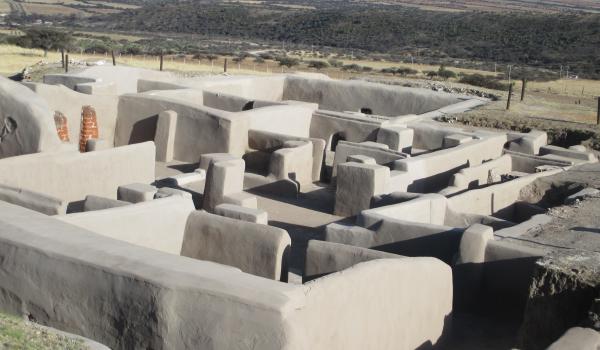
Quadrangular platform surrounded by an aisle. It is distinguished by the pilasters that supported the ceiling of the corridor. A drainage channel, which comes from the Astronomers Apartment Complex, runs from the west corner to the east.
Complejo Apartamental de Astrónomos
Built between 500-550, it is composed of several rooms surrounding a central atrium with a rectangular floor plan. On the northeast side is the Temple of the Suns, a two-story building with walls adorned with reliefs of suns painted in red. To the northwest there are two twin rooms whose central…
Complejo Apartamental de Astrónomos
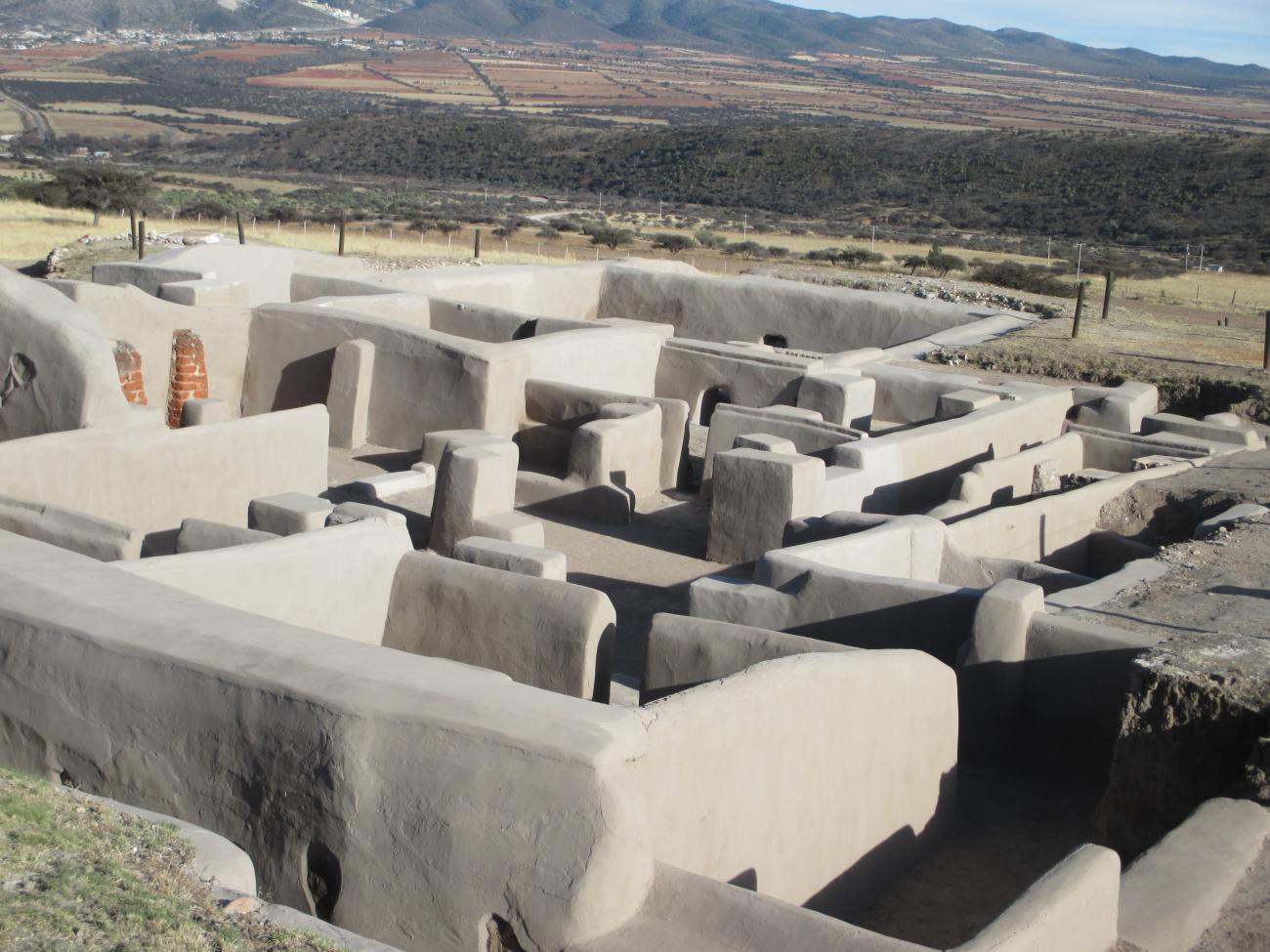
Built between 500-550, it is composed of several rooms surrounding a central atrium with a rectangular floor plan. On the northeast side is the Temple of the Suns, a two-story building with walls adorned with reliefs of suns painted in red. To the northwest there are two twin rooms whose central pilasters show a variant of the glyph of the Teotihuacan year.
Plaza principal
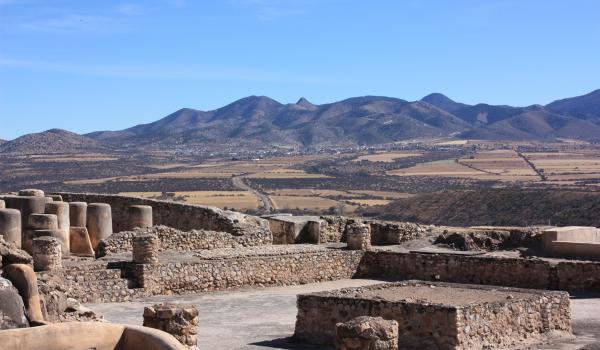
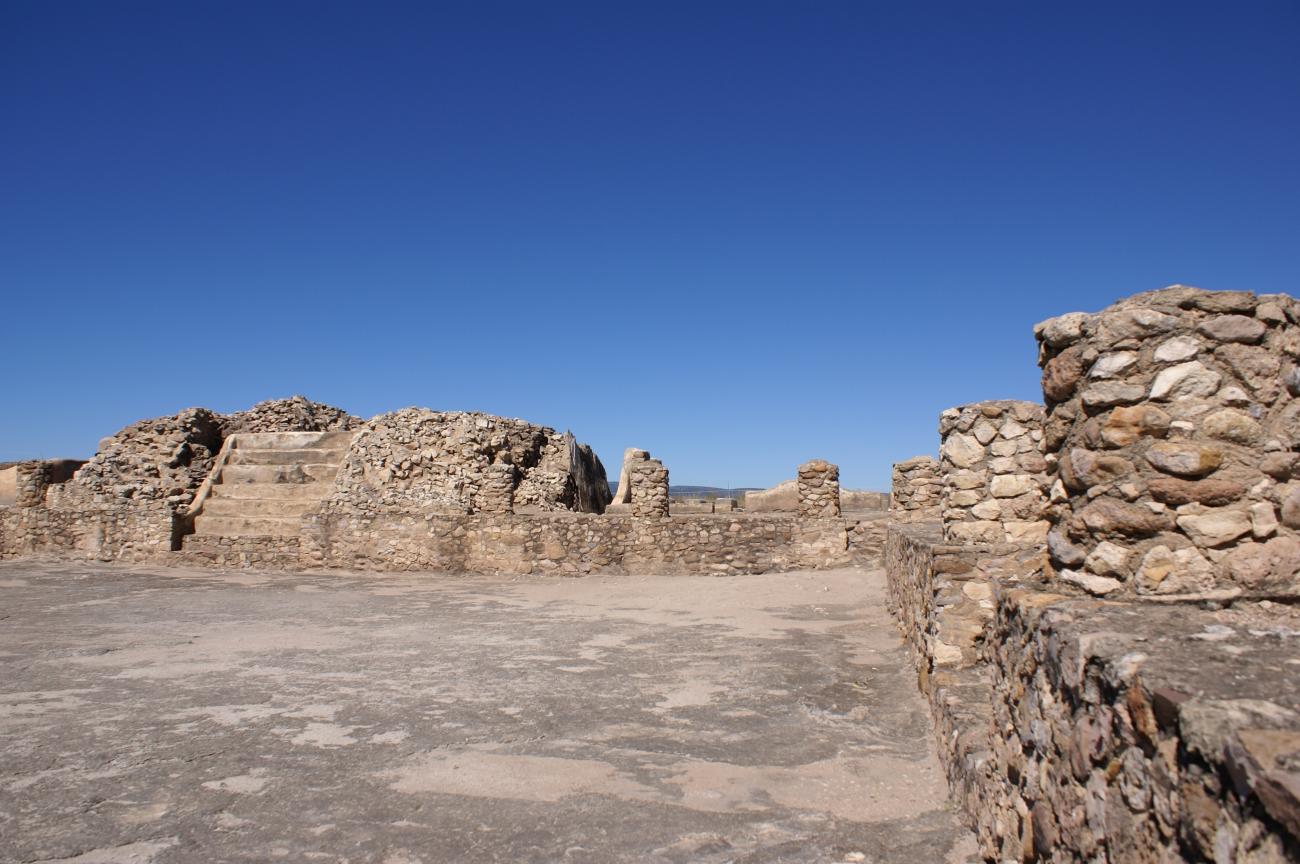
It has a rectangular shape and an altar in the center. Its corners are oriented towards the cardinal points. The sides are bordered by elevated walkways with staggered accesses on the interior side, to which were attached platforms on which rooms were built with adobe walls.
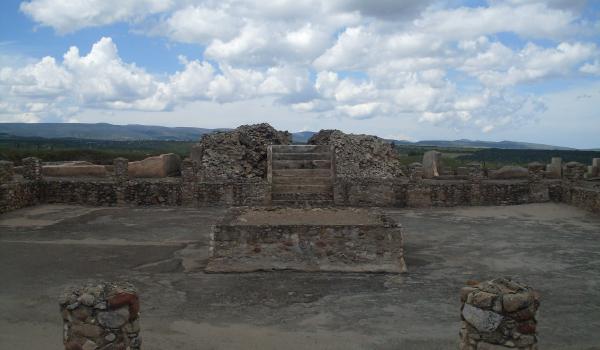
Pirámide del Sol, Templo de los Cráneos y Templo de los Fogones
The pyramidal base corresponds to the last construction stage. In its interior a crypt was found with the remains of three individuals, probably priests in charge of the solar cult. In the center of the Temple of the Skulls a quadrangular hearth was discovered, and in the floor two perforations…
Pirámide del Sol, Templo de los Cráneos y Templo de los Fogones
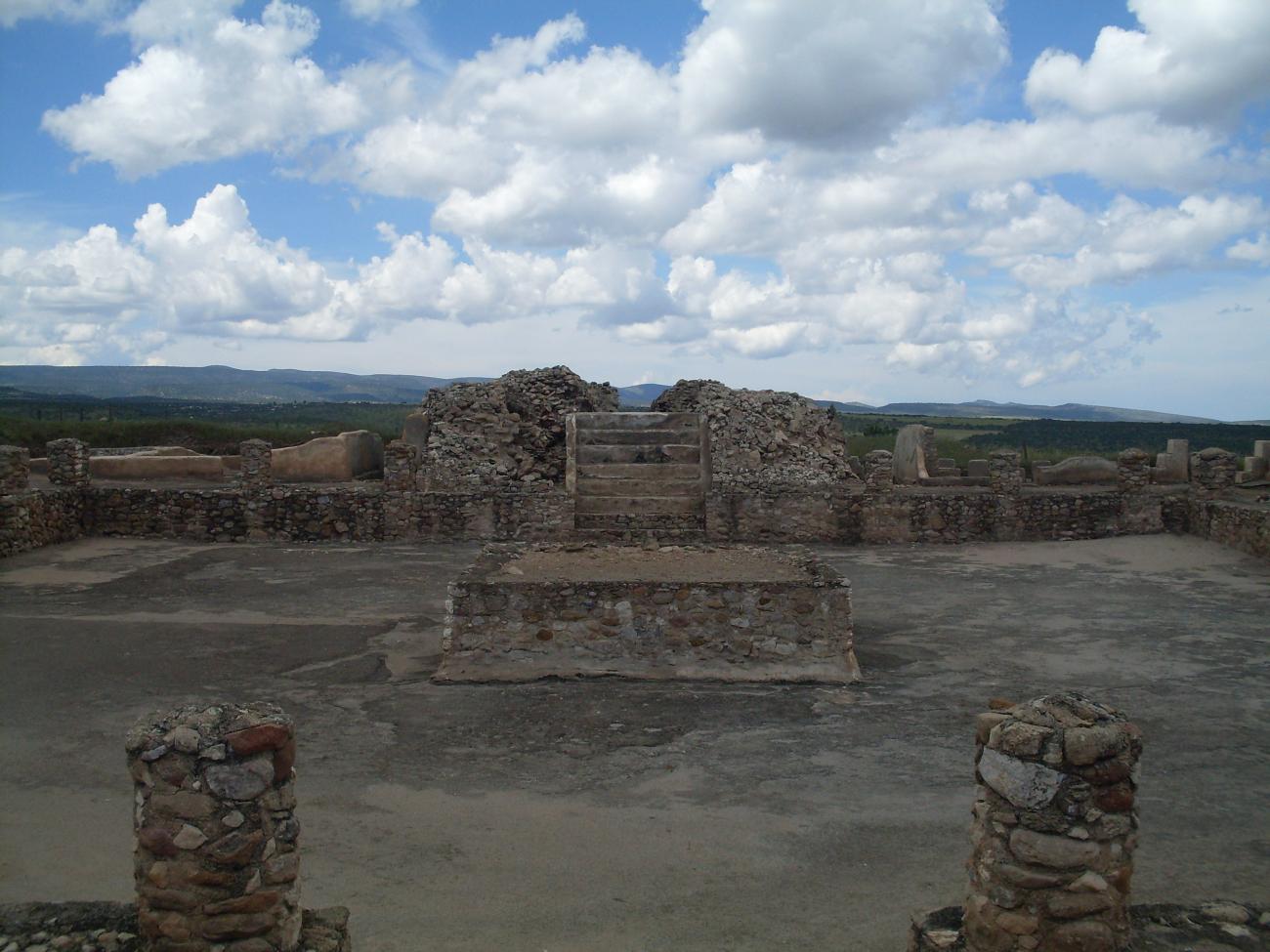
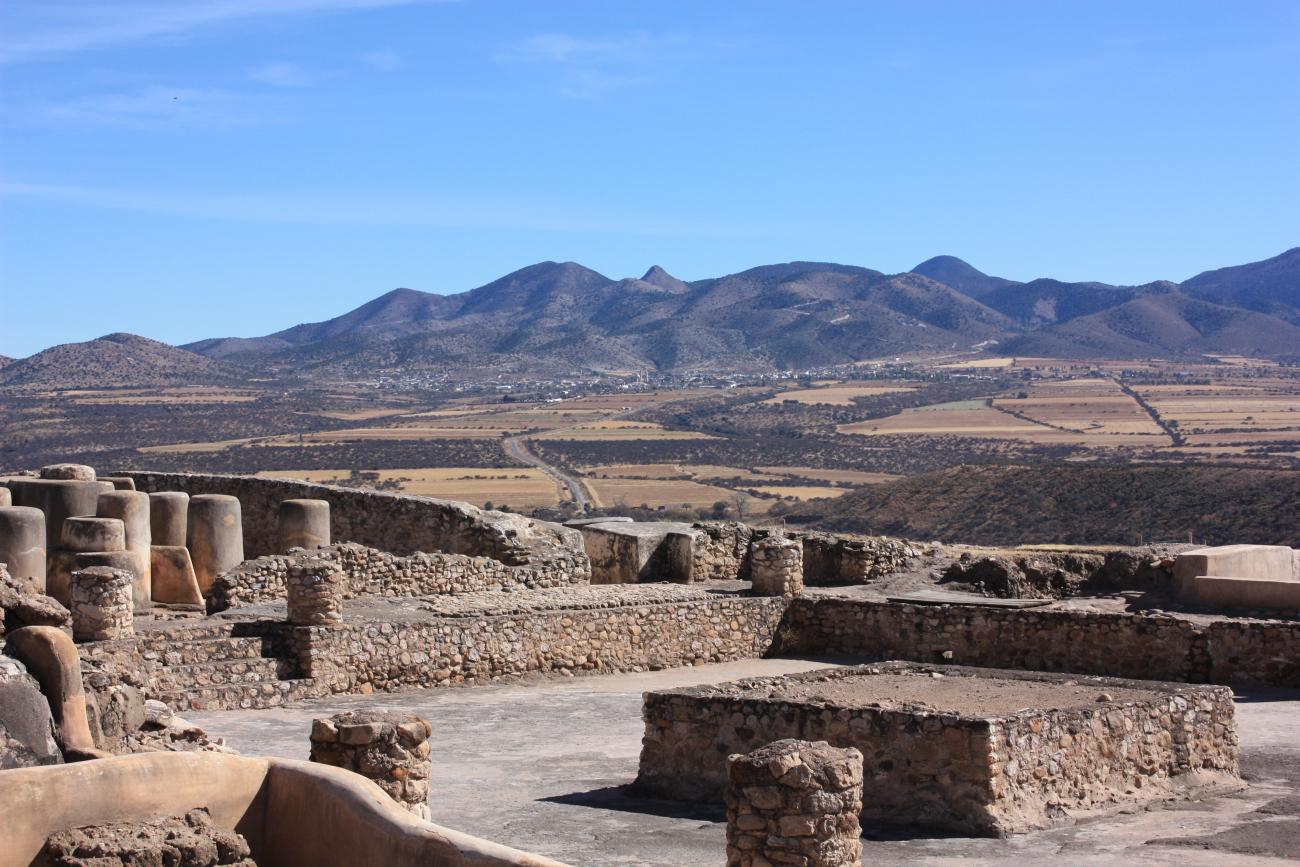
The pyramidal base corresponds to the last construction stage. In its interior a crypt was found with the remains of three individuals, probably priests in charge of the solar cult. In the center of the Temple of the Skulls a quadrangular hearth was discovered, and in the floor two perforations were detected in which there were wooden posts to support the roof. Towards the interior north corner, disarticulated human skeletal remains were recovered that were probably suspended from the ceiling. In the Temple of the Stoves, two of them were found inside the enclosure, from which it derives its name.
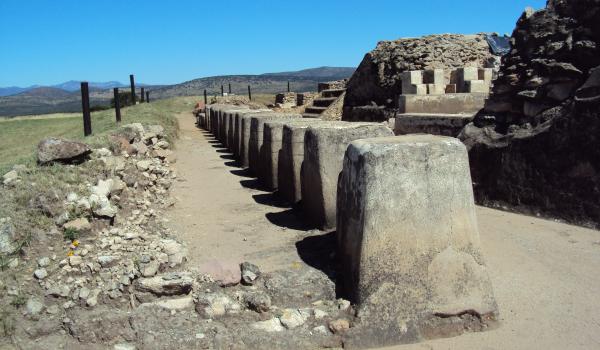
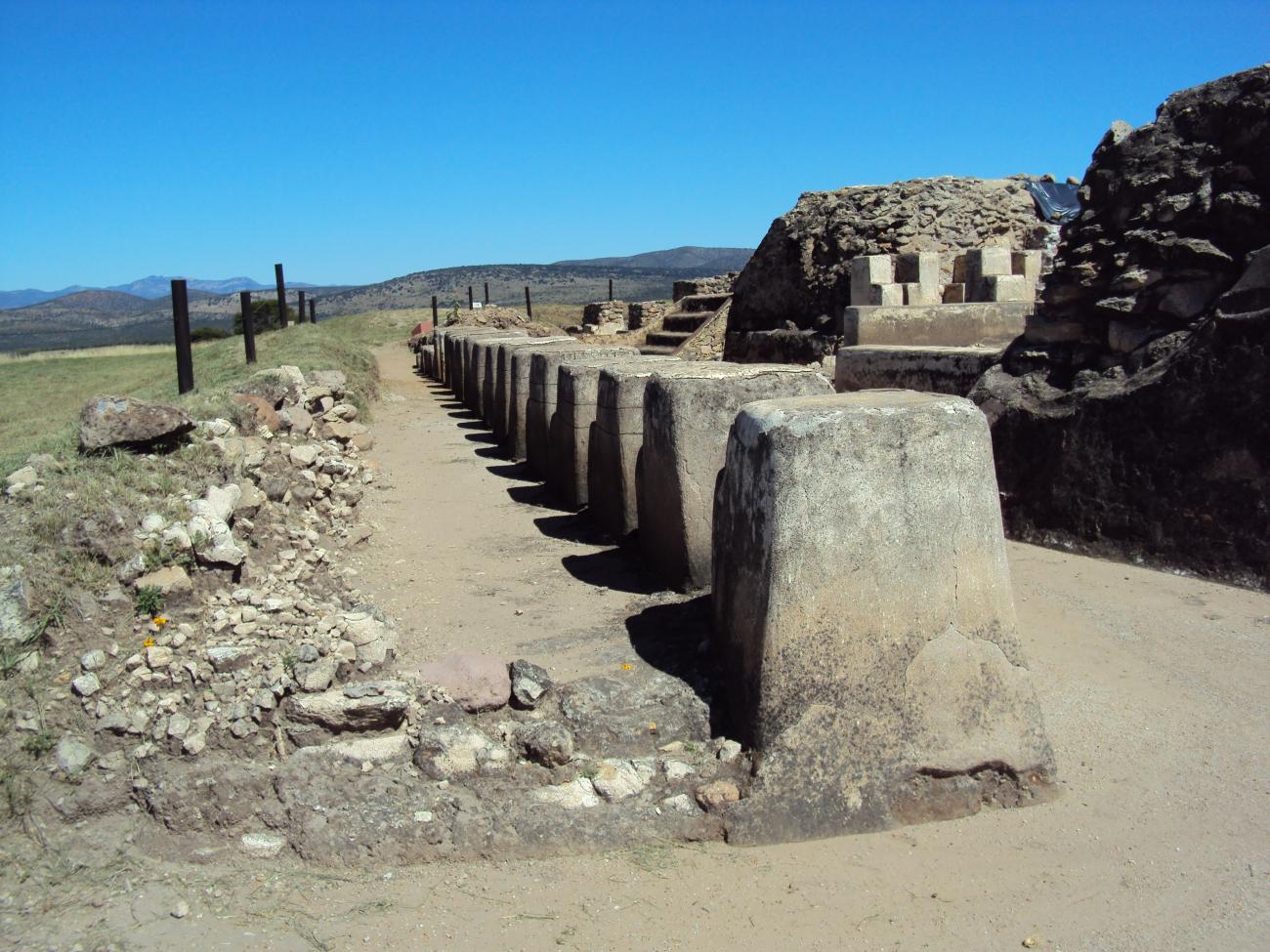
Muro de la Serpiente
It is formed by two rows of pilasters built with a series of staggered blocks, which delimit an access road to the northwest.
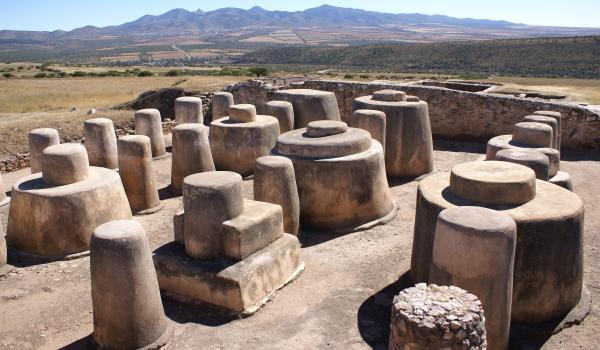
Salón de las Columnas y Escalera de Gamio
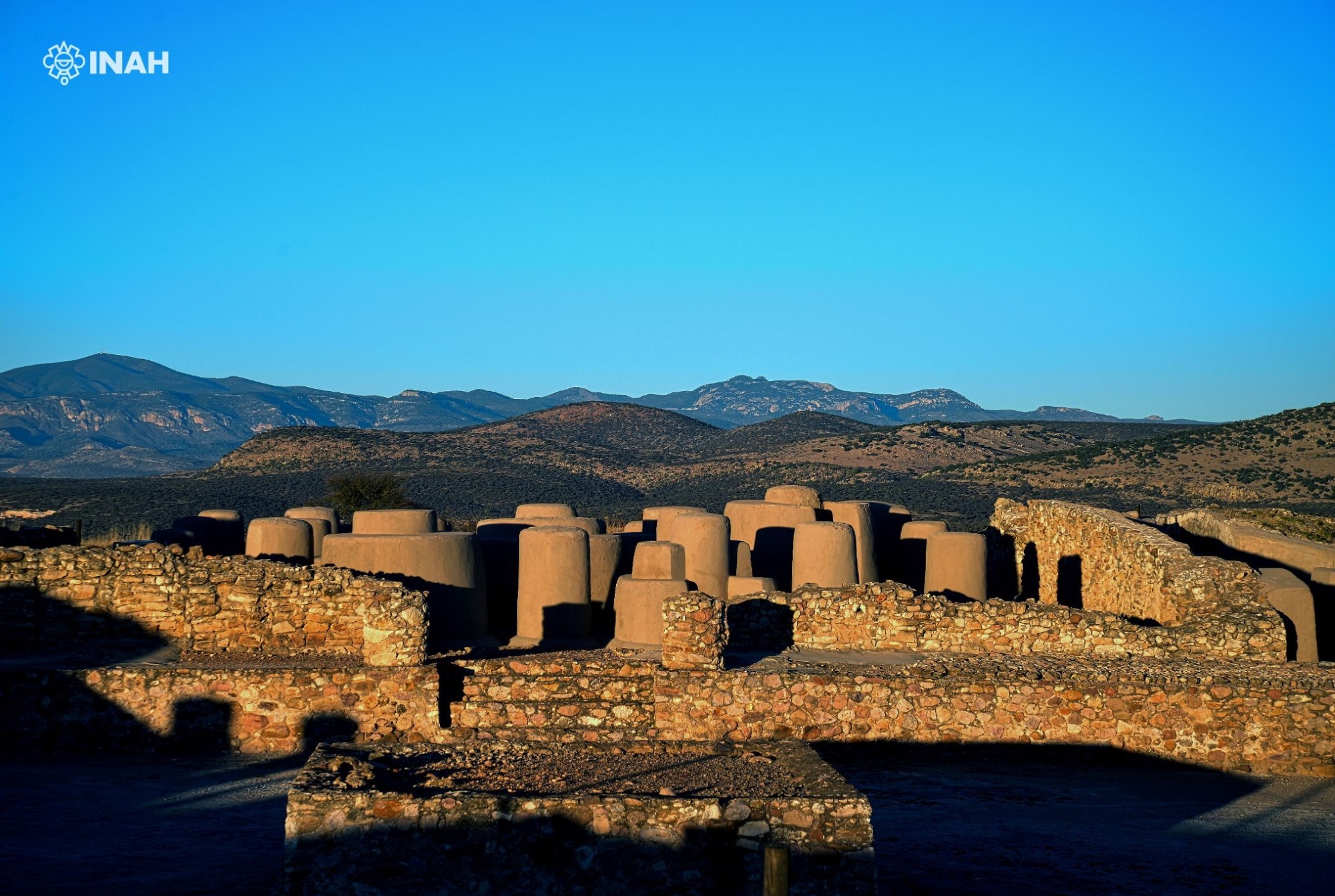
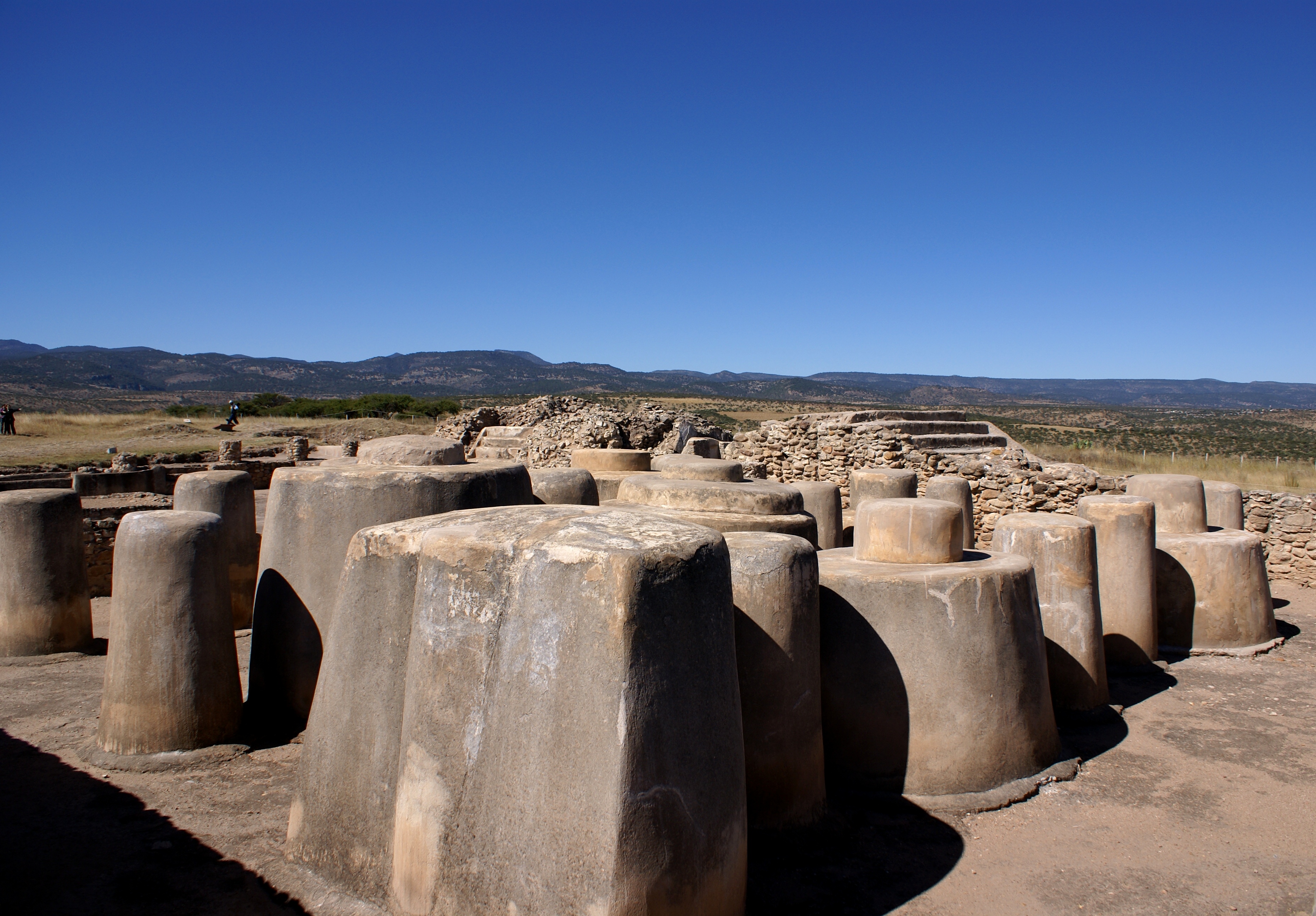
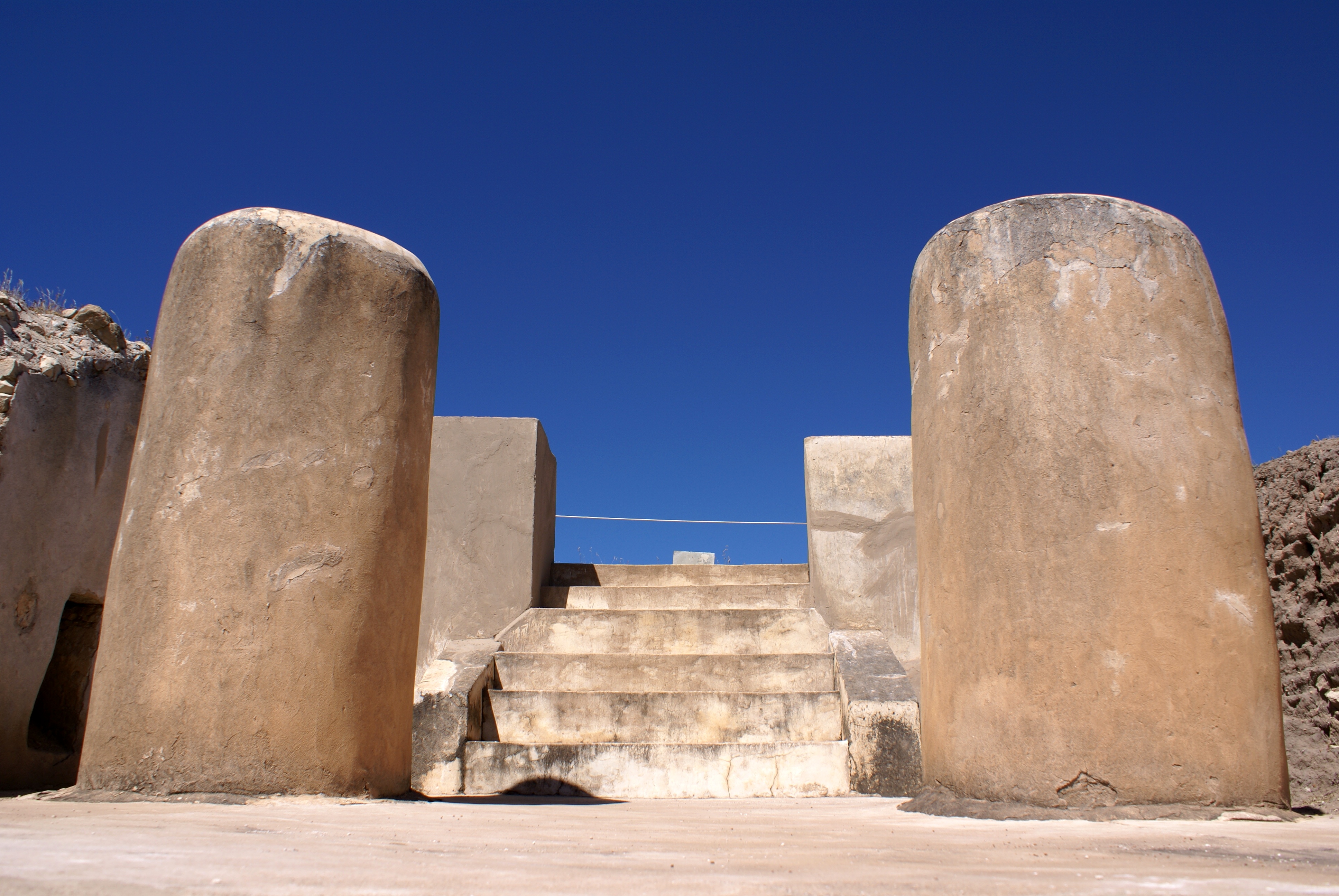
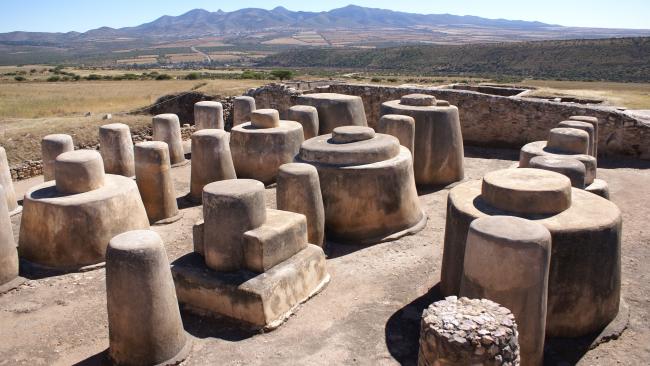
Quadrangular enclosure in whose interior there are four parallel rows of seven columns, which supported a roof. Eight of the columns were remodeled in periods subsequent to its original construction, and several offerings were deposited on the whitewashed floors of the Hall. Finally, the access was…
Salón de las Columnas y Escalera de Gamio
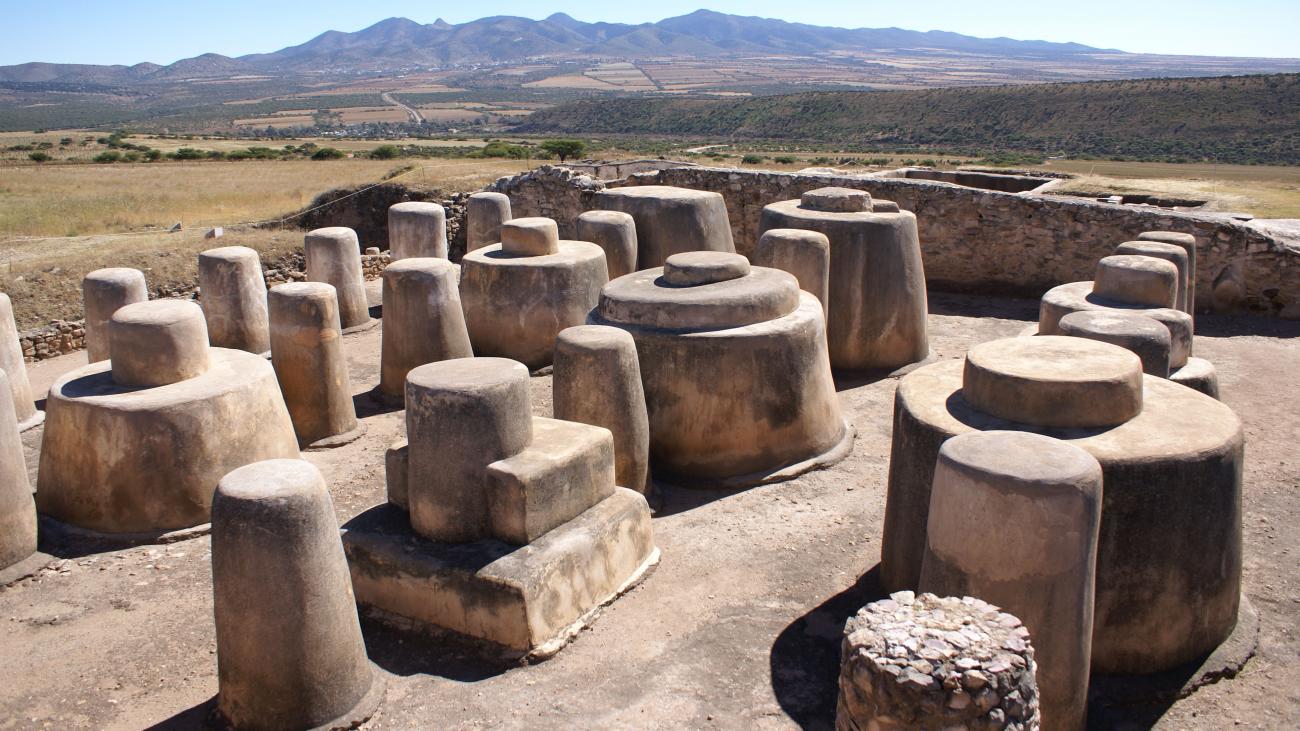
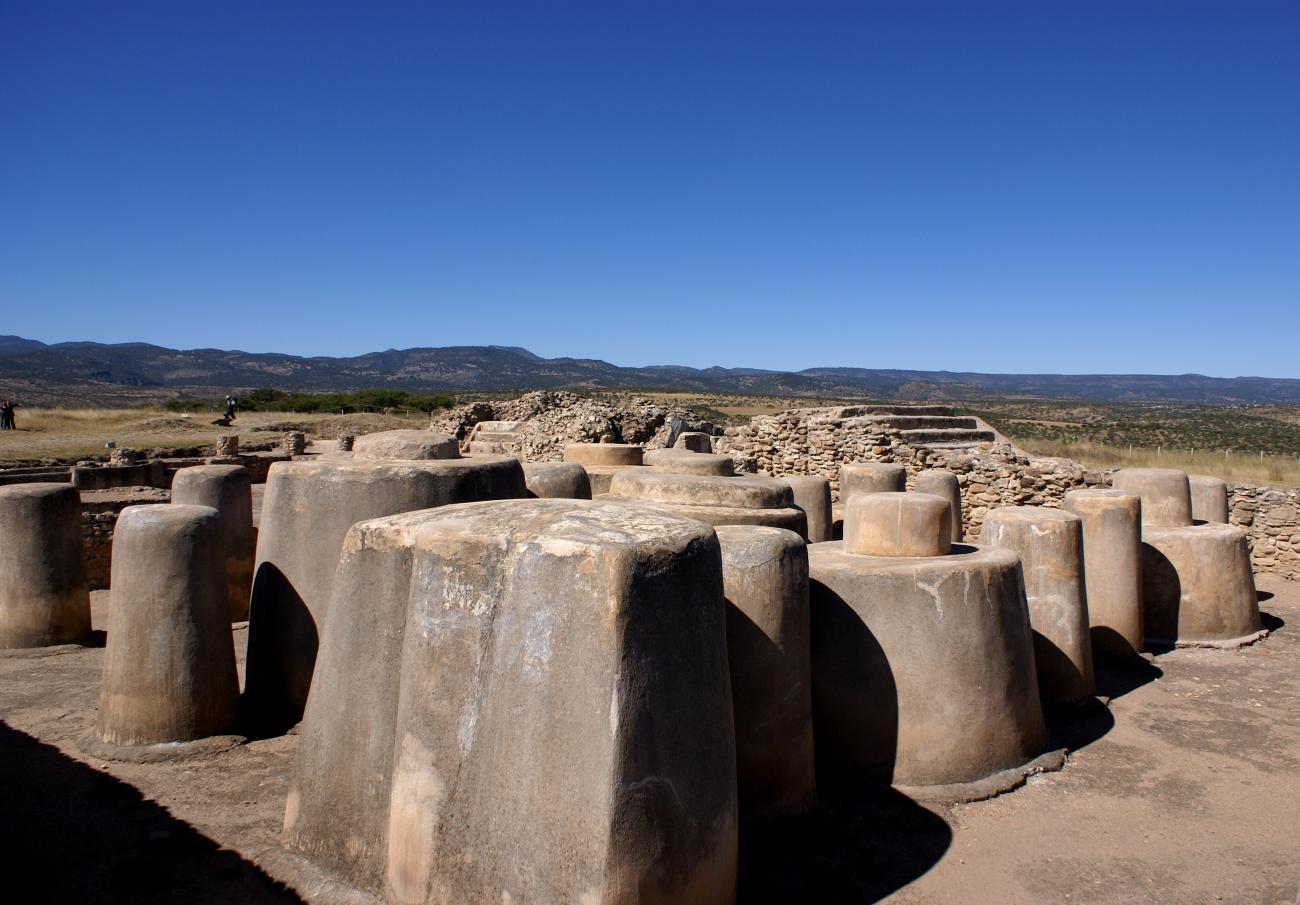
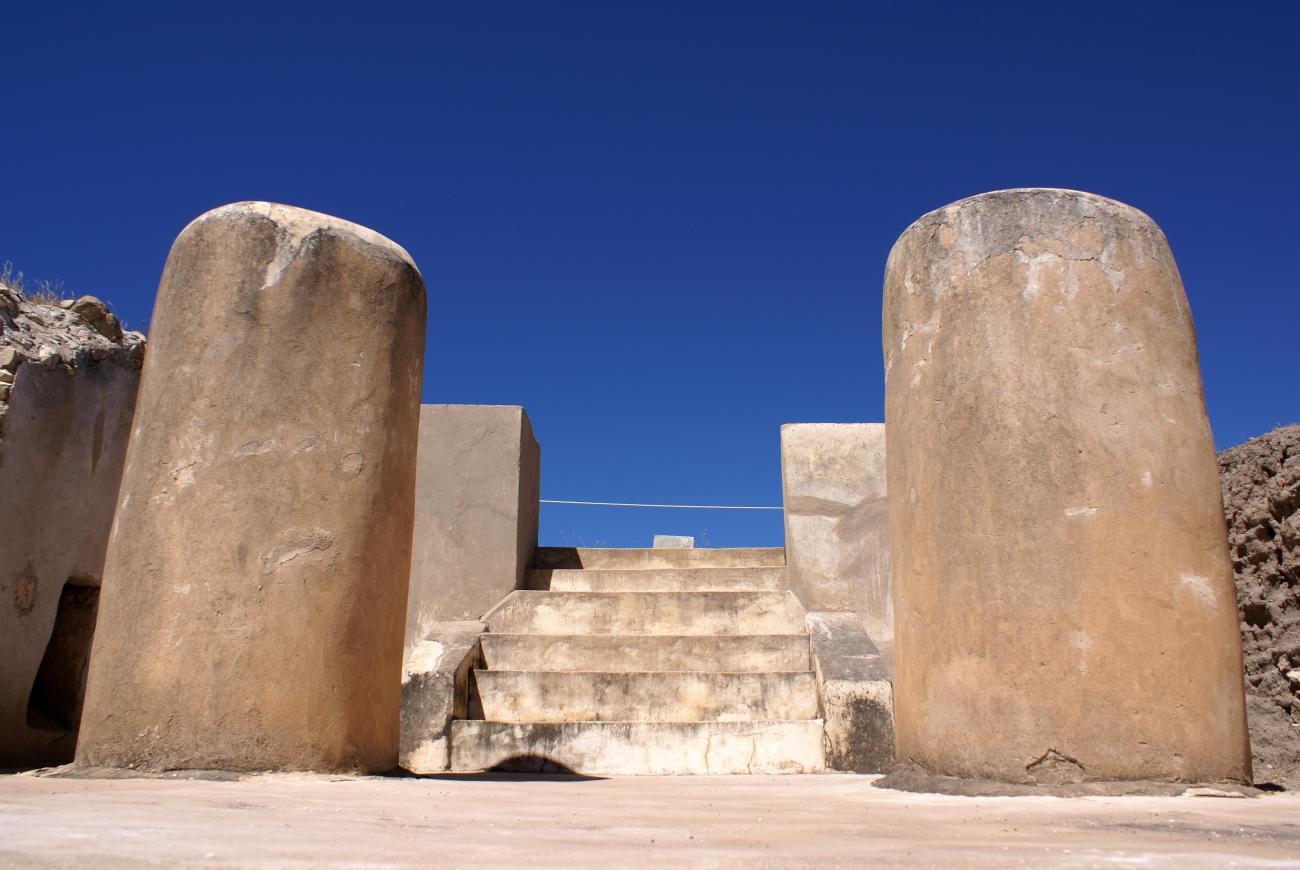
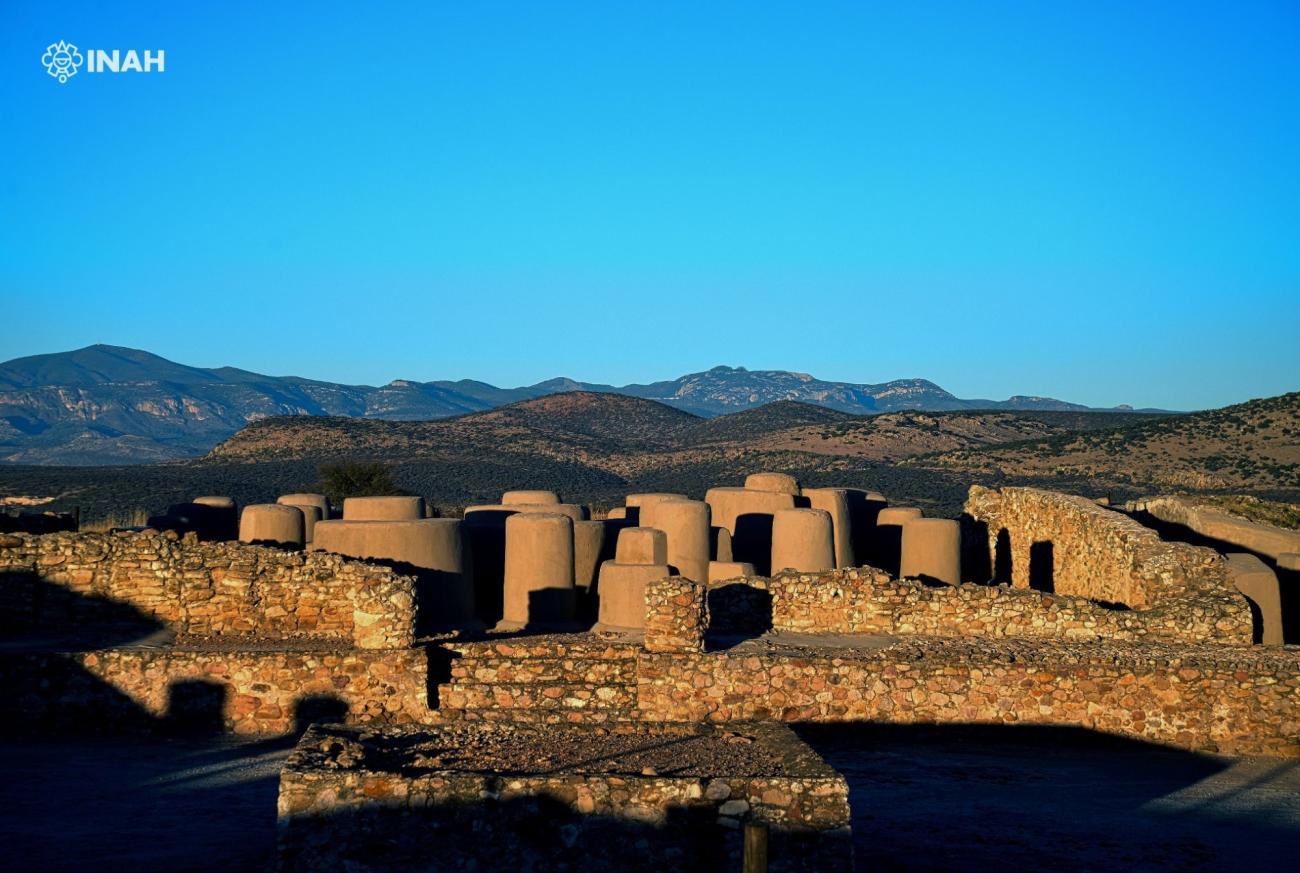
Quadrangular enclosure in whose interior there are four parallel rows of seven columns, which supported a roof. Eight of the columns were remodeled in periods subsequent to its original construction, and several offerings were deposited on the whitewashed floors of the Hall. Finally, the access was closed and the interior of the Hall was filled in to transform it into a large platform. On the northwest side of the Hall, the stairway now known as the Gamio stairway may have given access to the upper part of the new platform.
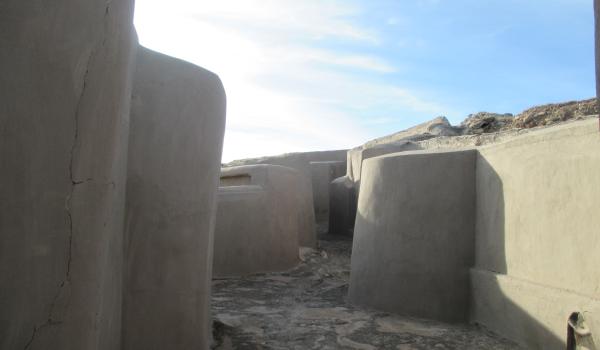
Laberinto-Observatorio
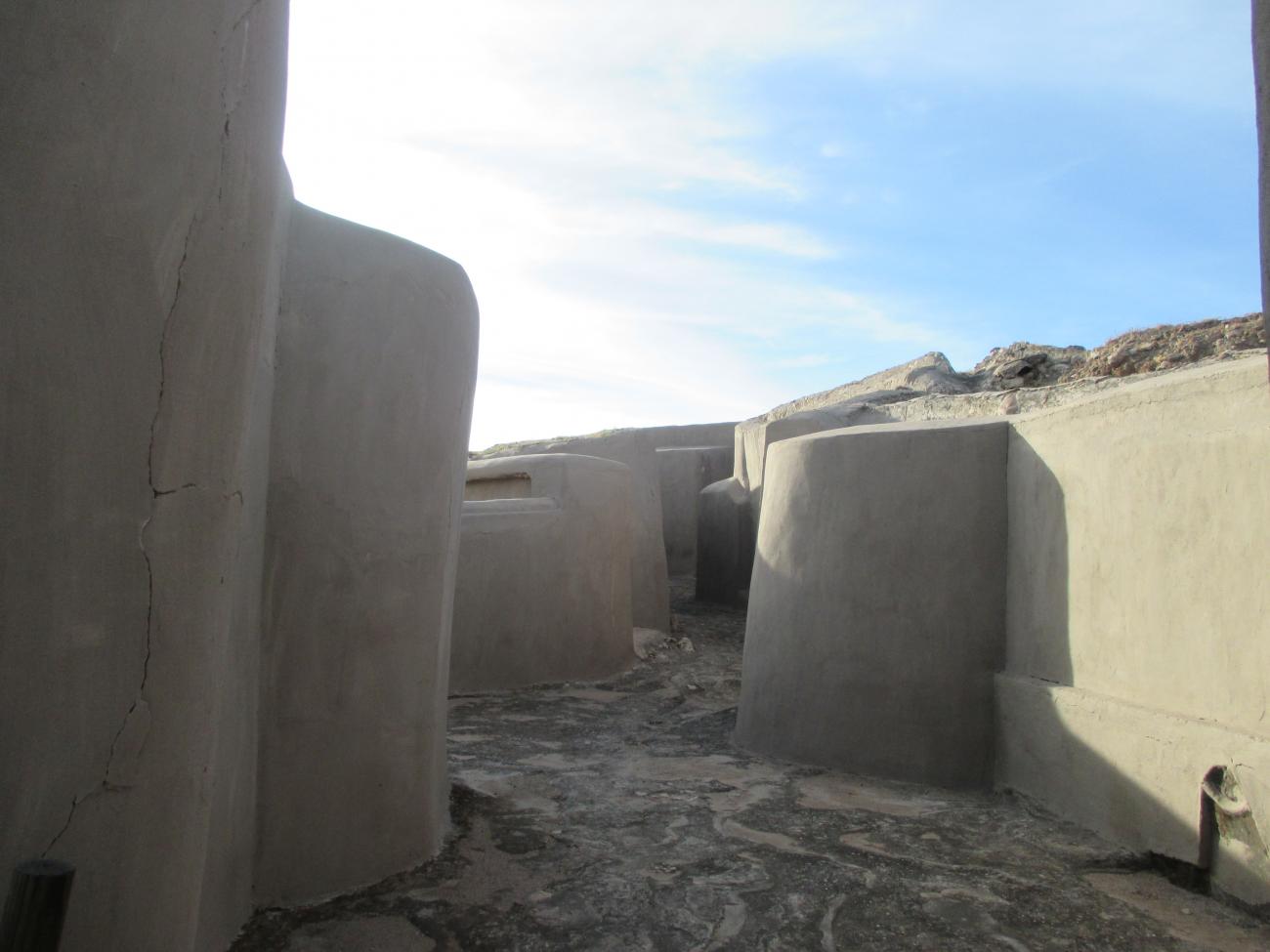
Corridor limited by masonry walls arranged at different angles, to which buttresses and pilasters were attached. From this corridor, in the spring and autumn equinoxes it is possible to observe the rising of the sun over the Picacho Pelón hill.
Pilar Solar
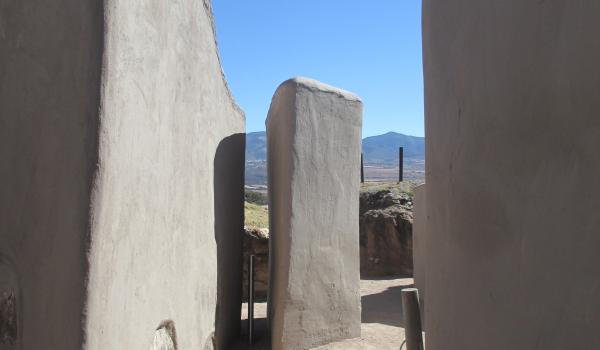
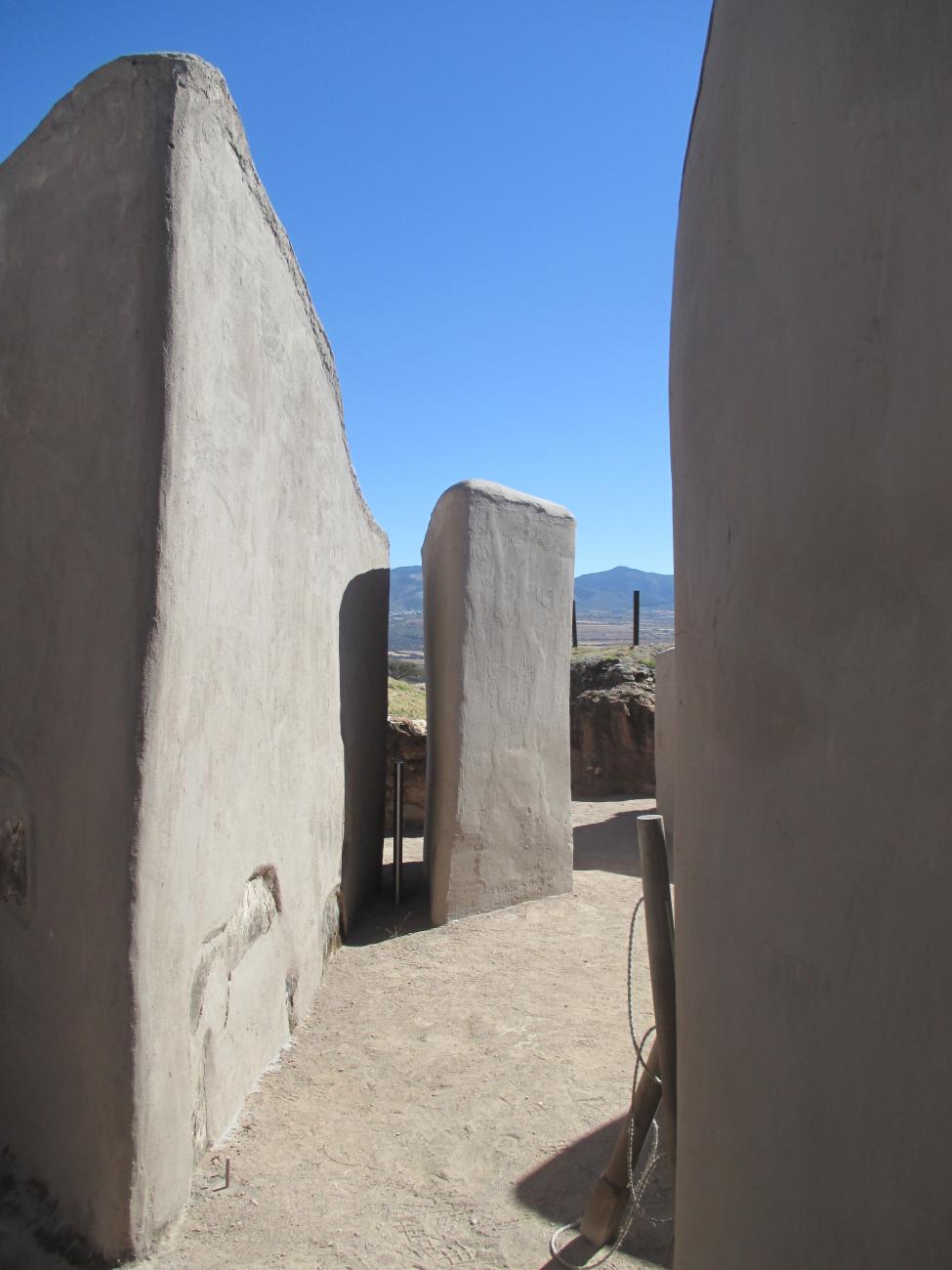
At the eastern end of the labyrinth corridor stands an isolated trapezoidal pillar, or solar gnomon, which casts a shadow at noon during the passage of the sun at the summer solstice.


Contact
- ResponsablePatricia Monreal Martínezpatricia_monreal@inah.gob.mx+52 (492) 922 5085 y 922 0403